“Let us allow God to act; He brings things to completion when we least expect it.”
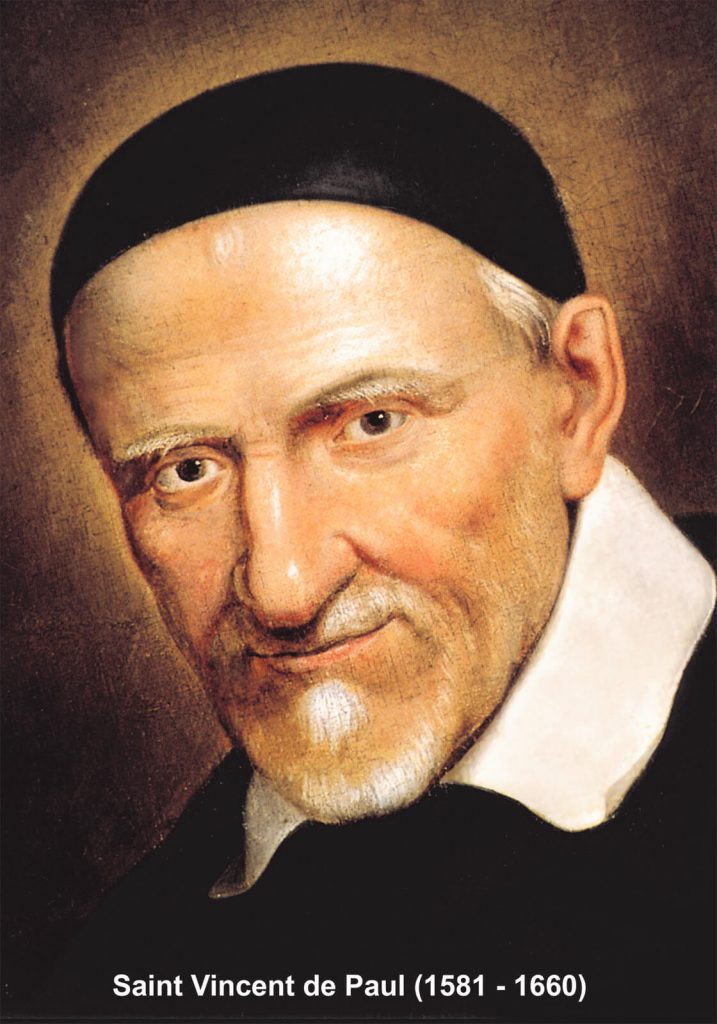
ST Vincent De Paul
Saint Vincent De Paul, (April 24, 1581- September 27, 1660) was a French priest who dedicated his life to helping the poor, and is considered one of the most important figures in the history of charity. He was canonized by Pope Clement X in 1737 and declared the patron saint of all charitable works.
Early Years
Saint Vincent De Paul was born in the small village of Pouy in Gascony, France. He was the fourth of five children in a peasant family, and his parents were very religious. He received his education from a local parish priest. At the age of 19, he was sent to study theology at the University of Toulouse, where he earned a doctorate in theology. n 1600, St. Vincent de Paul was ordained a priest, and he began his ministry in the French countryside. As a young priest, Saint Vincent de Paul had his share of ambition, and he seems to have given little thought to the poor. After his ordination, he set up a school for the sons of the nobility and gentry. With the money received from the tuition he continued his own higher education. By the time he was thirty he had come a long way on the path of learning and was trying to become a bishop.
In 1605 he had a turning point in his life, when he was captured by Barbary pirates while on a voyage to Tunis. Vincent had gone to Marseilles to collect his family’s inheritance. On his way back to southwestern France he decided to go by sea. Along his journey home, Saint Vincent’s ship was captured by Barbary pirates. The captain of the captured ship was cruelly murdered because he had resisted the pirates. Vincent and the others were put in irons and taken to the Barbary coast where they were sold as slaves. Vincent was sold first to a fisherman, then to a physician, and then to a renegade Christian farmer who had three wives. During his two years of captivity Vincent never ceased to ask our Blessed Lady for deliverance. His master was impressed by Vincent’s faith and decided to return to Europe and to the practice of his religion. Vincent and his former master secured a ship and escaped across the Mediterranean Sea to France.
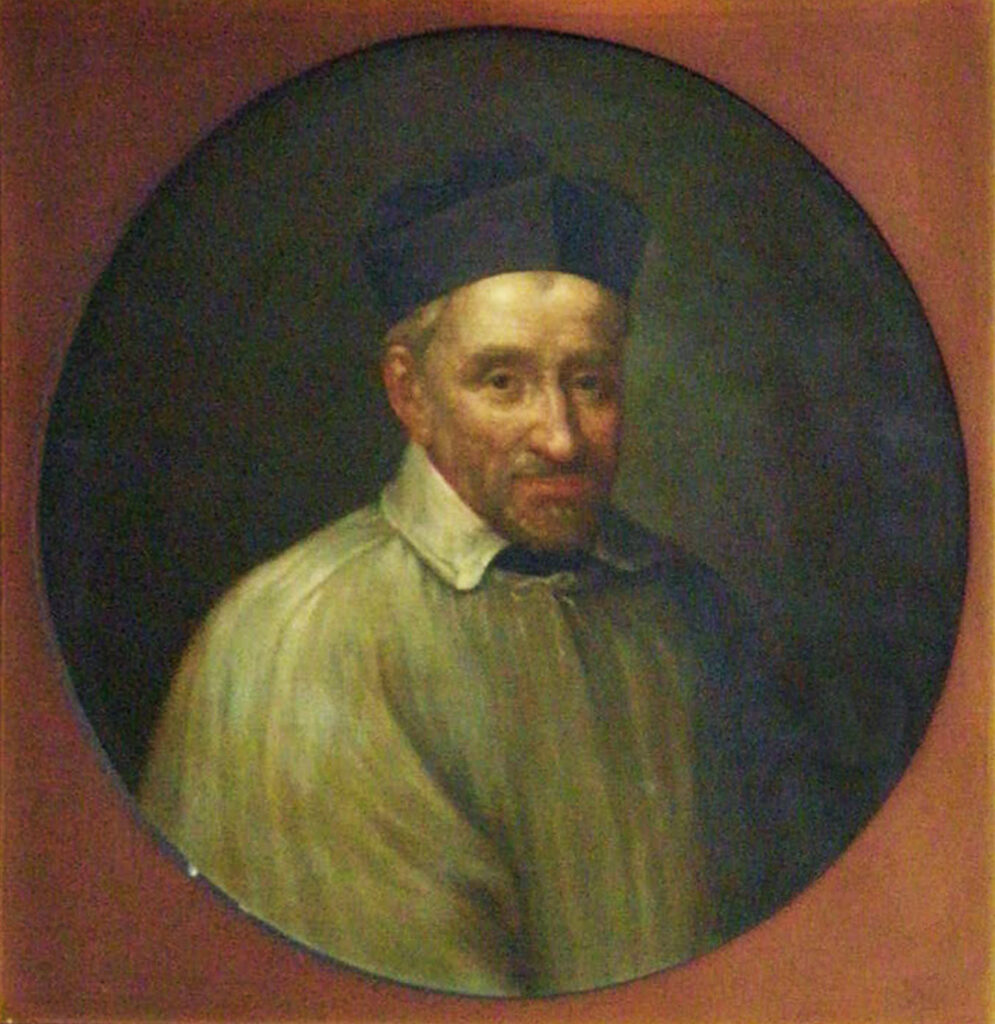
Shortly after this, another event had a profound effect upon Saint Vincent. A learned theologian whom he knew was so afflicted by temptations against faith that he could not offer Mass or recite the Divine Office or even come near a church without being tempted to blasphemy, or to a denial of the very existence of God. Besides this, he suffered terrible temptations of the flesh. This sorely tried priest came to Vincent for help. Vincent made every effort to help the priest, but all in vain. At length, Vincent asked God to relieve his friend and to let him suffer the temptations instead. Soon the priest came to Vincent with the joyful announcement bat the temptations had left him. But Vincent had the temptations, and he suffered terribly for four years. Then Vincent prayed: “Dear God, if you will take away these temptations, I will spend the rest of my life working for the poor.” The temptations stopped at once, and Vincent’s lifework had begun. It had taken two years of physical slavery and four years of spiritual agony to prepare the soul of Vincent for the work that God wanted him to do.
His Works
After his return to France, St. Vincent de Paul began to dedicate his life to helping the poor. He made it his mission to care for the sick, the poor, and the imprisoned, and he began traveling throughout the country to visit hospitals and prisons. He also started to organize groups of laypeople to help him in his work, which eventually led to the founding of the Vincentians, a religious congregation of priests and lay brothers. He established the Congregation of the Mission in 1625, which was a group of priests dedicated to evangelizing to the poor and providing them with spiritual, material and educational assistance. In 1633, Vincent founded the Daughters of Charity, a religious order of nuns devoted to providing physical, spiritual and educational aid to the poor and disadvantaged. The Daughters of Charity still exist today and are the most widely recognized charitable organization in the world.
Leading with spirit
During the years of spiritual struggle, St. Vincent made the acquaintance of a priest, Pierre de Berulle, who became his spiritual director. Vincent said of Pierre that “he was endowed with such learning and holiness that his like could not be found.” It was upon the advice of de Berulle that Vincent accepted his next three offices. For a year, Vincent was parish priest in Clichy, a suburb of Paris. Then for four years he labored on the estate of the noble de Gondi family. This did not mean a life of ease for Vincent. The de Gondi estate was extensive. Many people lived on it. Vincent was the spiritual head of something resembling a modern country.
Congregation of the Mission / Vincentians
Soon after St. Vincent accepted this new post, he was called to attend a peasant who lay dying. He was shocked to find that the man had been poorly instructed in his religion and had been making bad confessions for years. The man said his soul would have been lost if it had not been for Vincent. As Vincent moved about the estate, he was appalled by the ignorance he found. He secured permission from Madame de Gondi to have missions given for the benefit of her dependents and to provide them with regular religious instruction. But who would give the missions and the religious instruction? Where were the priests who would devote themselves entirely to the service of the poor?
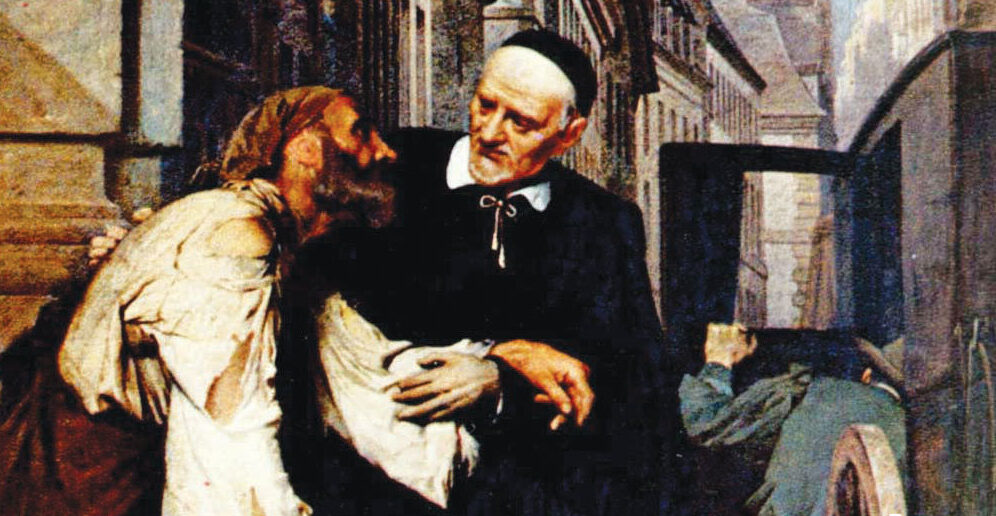
To meet the need for such priests, Vincent organized, with the approval of the Archbishop of Paris, the Congregation of the Mission. The work of this congregation was twofold: working among the poor and training future priests in seminaries. Today, the members of this order are commonly called the Vincentians. The de Gondis gave Vincent the financial help he needed to start his congregation.
Confraternities of Charity
In 1632, the Congregation obtained a permanent home at St. Lazare in Paris. Here Vincent made his headquarters for the remainder of his life. The first Ladies of Charity were middle class women for whom Vincent drew up a plan of action. Each group of ladies had three officers: a president, a vice-president, and a treasurer. These officers were to visit poor families, see what they needed, and supply what was lacking. The officers were the responsible agents, but they were to enlist whatever other help was needed.
After four years, Saint Vincent de Paul left the de Gondis and became a parish priest at Chatillon-des-Dombes. At Mass one Sunday, Vincent told his congregation about a family whose members were sick and much in need. That afternoon he called on the family. He found that the parishioners had responded generously. The family had more food than they could use before it would spoil. Vincent saw that some kind of system was needed. He found, too, that other families in the neighborhood needed assistance. To answer these needs, together with St. Elizabeth Ann Seton, organized the Confraternity of the Ladies of Charity and a little later a corresponding Confraternity of Charity for men.
The men’s Confraternity helped find jobs for the poor, gave advice, and provided religious instruction for those who needed it. (Two hundred years later when Frederic Ozanam organized the St. Vincent de Paul Society, he used this Confraternity as a model.)
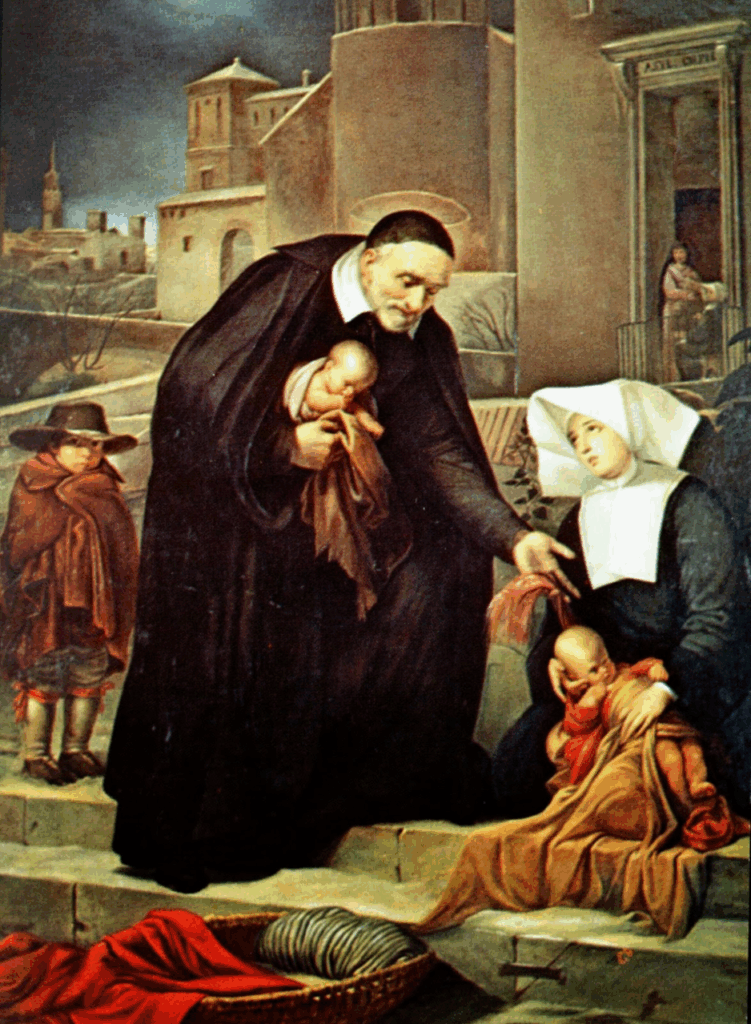
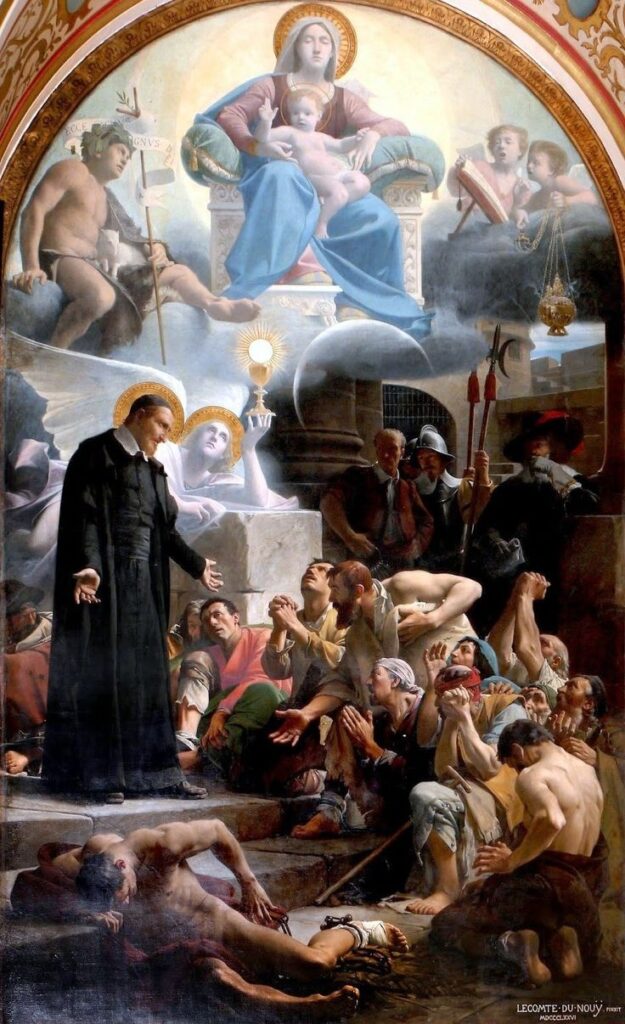
When this work was well launched, Saint Vincent went back to the de Gondis. The Duke de Gondi was in charge of the galleys, or warships. These ships were propelled by galley slaves who rowed in unison. St. Vincent became interested in the plight of these miserable men. He persuaded the Duke to provide hospitals and medical care for them and to improve the conditions in the prisons from which they came. Vincent himself often visited the galleys, consoling the men and hearing their confessions In 1625 the first home of the Congregation of the Mission was opened and Vincent left the de Gondia to live there.
Saint Vincent was convinced that there should be an organization of women who could give all their time to this work. With the help of Louise de Marillac (St. Louise), a wealthy and distinguished widow, he started the Daughters of Charity in 1633. The young women who were admitted to this organization were to work among the poor and to strive for great personal holiness. There was no idea of a religious institute at first. This idea developed gradually. The blue habit and white cornet that were eventually adopted by the Daughters of Charity of St. Vincent de Paul are now known throughout the world,
The Thirty Years’ War
In 1633, during the Thirty Years’ War, eastern France was invaded and pillaged by mercenary troops. The results were poverty, hunger, and disease. Vincent organized what would now be called “war relief” and did much to alleviate suffering. Some of his missionary priests and some of his Daughters lost their lives while fighting pestilence.
Establishing an Orphanage
In 1634, Vincent organized the Confraternity of the Hotel Dieu to care for the sick in hospitals. One night as Vincent was walking along a street in Paris, he saw a man crippling a helpless child. He was doing this so that the child would be more pitiable and so would receive more money from his begging.
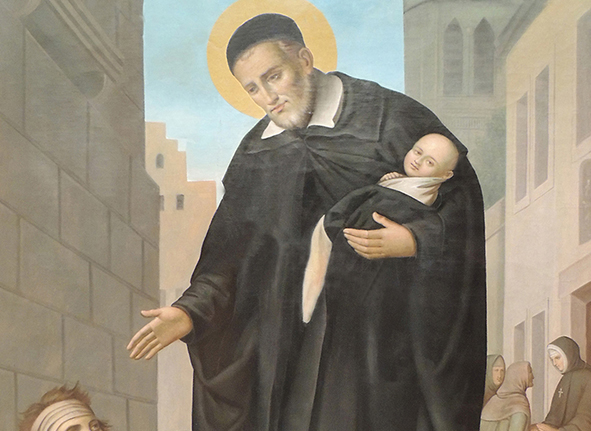
Vincent’s heart could not stand such terrible injustice, and so he started a home for orphans, with the Daughters of Charity in charge. He also started a home for the aged. In this home the husband and wife were not compelled to separate in order to receive care, as was the case in most homes at that time. There is scarcely a work of charity that is known today that is not undertaken by St. Vincent more than three centuries ago.
He cared for the poor and the sick, for abandoned infants, for orphans, for prisoners. He arranged vocational training for boys and girls. In the care of the aged he was far ahead of his time, as he was in war relief. He organized his charities so that the people who needed assistance would continue to get it.
Vincent’s work was inspired by Christian ideals. Always the souls of the afflicted were cared for along with their bodies. Those who did the work were taught to recognize the poor, the sick, and the helpless as the suffering members of Jesus Christ.
Death and Canonization
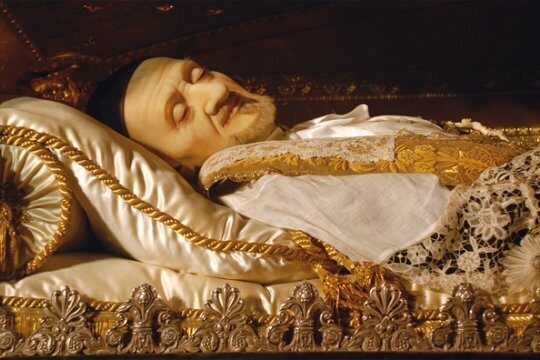
Toward the end of his life, St. Vincent de Paul suffered much from ill health. In the autumn of 1661, he died calmly in his chair. He was 84 years old.
He was beatified in 1729 and canonized in 1737. In 1885, Pope Leo XIII proclaimed him patron of all charitable societies.